Property owners in the Panama City Beach area face vegetation growth that differs from most inland locations. Our heat, humidity, long growing seasons, and frequent rainfall allow weeds, brush, and invasive plants to expand rapidly.
State Contractors helps property owners address these challenges by applying local knowledge to proactive land clearing strategies that protect land before overgrowth becomes a costly problem. Unchecked vegetation does more than affect appearance. It introduces safety risks, access limitations, pest pressure, and compliance concerns.
Understand Why Overgrowth Accelerates in the Panama City Beach Region
Panama City Beach sits within a subtropical climate zone where vegetation grows virtually year-round. Warm soil temperatures allow roots to spread quickly, while periodic heavy rain supports aggressive grasses and woody plants.
Disturbed ground from construction, storm cleanup, or grading invites invasive species that establish dominance before turf or native plants recover.
Local experts recognize that land clearing for overgrown vegetation in Bay County requires more than mowing or trimming.
Cogongrass, torpedograss, and woody invasives spread through underground structures that resist surface cutting. Vines and brush form dense layers that hide debris and limit visibility. Without intervention, lightly overgrown parcels transition into young forest surprisingly fast.
Professionals familiar with coastal Florida conditions identify vegetation types early and select clearing methods that limit regrowth rather than accelerate it. This targeted approach forms the foundation of long-term property protection.
See How Overgrowth Creates Safety and Liability Exposure
Overgrowth introduces hazards that property owners often overlook until an incident occurs. Dense vegetation hides uneven ground, discarded materials, and structural remnants that can cause trip-and-fall injuries. Blocked sightlines near driveways, parking areas, and corner lots increase the risk of collisions for vehicles and pedestrians.
Correcting these issues demonstrates the real-world benefits of clearing land for safety, especially on residential rental properties and commercial sites. Overgrowth also restricts access to meters, backflow devices, cleanouts, and emergency egress routes. When responders cannot efficiently reach equipment, minor issues can rapidly escalate into costly emergencies.
Fire behavior presents another concern. Continuous grasses and brush create fuel paths that allow flames to travel toward structures. Even in coastal Bay County, vegetation-driven fires occur during dry and windy periods. Reducing fuel continuity by clearing supports promotes defensible space principles throughout Florida.
Pests also thrive in unmanaged vegetation. Dense cover supports rodents, snakes, mosquitoes, and insects that threaten passersby and migrate toward buildings. Removing hiding and nesting areas reduces nuisance activity and improves perceived property condition.
Learn How Professional Clearing Protects Property Long Term
Long-term property protection through site clearing depends on deliberate planning that accounts for vegetation behavior, site constraints, and future land use rather than appearance alone.
Start With Assessment To Prevent Costly Mistakes
Site clearing that delivers real property protection begins with expert assessment. Professionals evaluate vegetation types, drainage paths, erosion-prone slopes, and proximity to structures. This early review prevents accidental damage, identifies compliance triggers, and reduces the risk of corrective work later.
Match Clearing Methods to Functional Site Goals
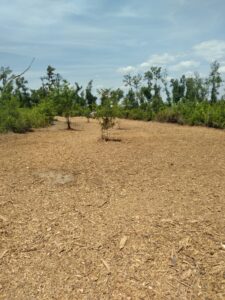
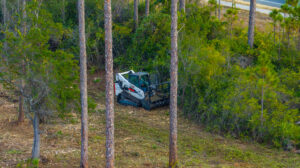
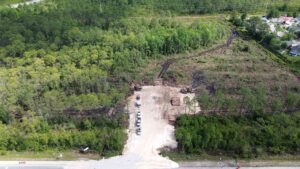
Land clearing strategies vary based on intended outcomes. Forestry mulching processes brush and small trees into mulch that stabilizes soil and reduces haul-off. Mechanical clearing removes dense thickets and saplings where full access is required. Selective clearing preserves a healthy canopy while eliminating ladder fuels near buildings and access routes.
Control Regrowth Instead of Waiting To React
Managing weeds and brush removal is most effective when professionals handle the work systematically. Skilled contractors evaluate regrowth patterns, invasive pressure, and seasonal growth rates, then recommend follow-up intervals that match local conditions. In and around Panama City Beach, rapid regrowth is expected, not a surprise.
Handle Debris To Support Soil Stability
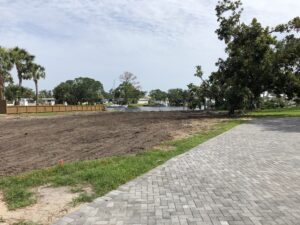
Debris handling influences erosion, drainage, and long-term maintenance. Mulching, hauling, or approved burning must align with site constraints and local rules. Clean edges along fences and boundaries prevent vegetation from creeping back into maintained areas. Stabilized soil reduces erosion after heavy rain events.
Why Local Expertise Outperforms Distant Providers
Regional experience directly affects your land clearing outcomes, including successful compliance and long-term site performance that stands up to storms.
Navigate Bay County Rules With Local Knowledge
Bay County includes protected trees, regulated wetlands, and stormwater requirements that apply to many properties. Crews familiar with local enforcement understand permit triggers and inspection expectations.
Avoid Common Risks of Distant Providers
Distant providers may offer equipment and manpower but often lack familiarity with local vegetation behavior and compliance thresholds. Travel delays slow response after storms. Limited invasive knowledge leads to ineffective land clearing and worsening regrowth cycles.
Get Local Guidance From State Contractors To Stop Overgrowth Around PCB
Overgrowth in the Panama City Beach area escalates quickly, but proactive clearing prevents costly consequences. State Contractors applies regional knowledge to protect property through strategic clearing tailored to coastal Florida conditions.
For precision land clearing services tailored to your circumstances, call State Contractors at (850) 571-5250 or contact us online to get a free estimate.